Sunday, February 21, 2016

The Role of Women in the Late 18th and Early 19th Century

Mary Wollstonecraft’s “A Vindication of the Rights of Woman” (1795) discusses the role of the average middle class white woman in the 19th century.  She argues that this group of women are shallow, vain, and petty.  They seem to exist only to look nice and to entertain men.  She writes that women should be educated so that they will be able to make better wives and mothers.  Jane Austen seems to be advocating for something similar in her novel Pride and Prejudice (1813)This book was written a few decades after “A Vindication of the Rights of Woman.”  It features a protagonist named Elizabeth Bennet who is a middle class white woman. 
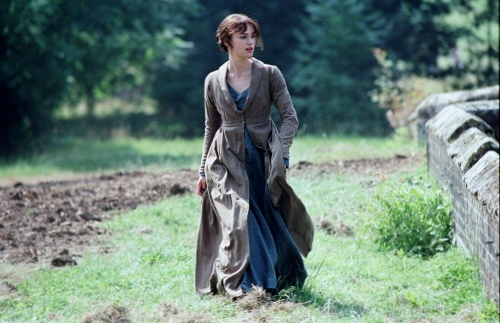
Elizabeth enjoys improving her body as well as her mind.  Wollstonecraft writes that women would not be so childish “if girls were allowed to take sufficient exercise, and not confined in close rooms till their muscles are relaxed, and their powers of digestion destroyed” (Wollstonecraft 234).  Girls would be much better and stronger women if they were allowed to improve their bodies the way boys could.  In Pride and Prejudice, Elizabeth walks to a friend’s house in order to see her sick sister.  Elizabeth enjoys the exercise, but the other women she encounters look down on her for this (Movie depictions of this scene can be found here and here). 

In fact, Elizabeth encounters many different individuals who are very similar to those that Mary Wollstonecraft described.  A woman named Caroline Bingley tells Elizabeth that “a woman must have a thorough knowledge of music, singing, drawing, dancing, and the modern languages…she must possess a certain something in her air and manner of walking, the tone of her voice, her address and expressions” (Austen 25).  Miss Bingley’s idea of a good woman is entirely made up of talents or traits that would appeal to men, but contains nothing that would help to improve a woman’s mind (This scene from the movie can be found here).  Elizabeth, however, enjoys reading, walking, and intelligent conversation.  She is much closer to Wollstonecraft’s idea of what women should strive to be and ends up having a happy and successful life because of it. 

Sources:
Austen, Jane. Pride and Prejudice. New York: Barnes and Noble, 2011. Print.
Wollstonecraft. Mary. “A Vindication of the Rights of Woman.” The Norton Anthology English Literature: The Romantic Period. Ed. Stephen Greenblatt. New York: Norton, 2012. 211-239. Print.

Sunday, February 14, 2016

William Blake and Coming of Age Stories

William Blake’s “Songs of Innocence” (1789) and “Songs of Experience” (1794) describe the differences between childhood and adulthood.  The poems from “Songs of Innocence” are very joyful and kind, whereas the poems from “Songs of Experience” are generally dark and dismal.  Many of the poems in “Songs of Innocence” and “Songs of Experience” match up with each other to display two different perspectives on the same subject.  In “The Chimney Sweeper” from “Songs of Experience,” the young chimney sweeper is “crying ‘weep, ‘weep, in notes of woe” and says that God and his parents “make up a heaven of our misery” (Blake 128).  In “The Chimney Sweeper” from “Songs of Innocence,” however, the boy sooths another crying child and dreams of meeting angels.  He later says that “if all do their duty, they need not fear harm” (Blake 122).  The boys from these poems are both experiencing the same terrible situation, but the child from “Songs of Experience” has a much clearer idea of how awful his situation truly is and has lost all hope because of it. 

This contrast between “Songs of Innocence” and “Songs of Experience” displays a stark change between childhood and adulthood that can also be observed in many different coming of age stories in literature today.  One modern example of a coming of age story is Marjane Satrapi’s Persepolis (2000).  Persepolis is a graphic novel about the life of a young girl named Marji living with her family in Iran in the 1980s.  This was near the beginning of a time of extreme religious and political turmoil in this area and it forced Marji to learn some harsh truths about the world at a young age.  She experiences poverty, bombings, the execution of her uncle, and homelessness that all completely change her view of the world.  As the story progresses, we see Marji slowly learn more about herself and the world around her as she changes from the innocent, somewhat naïve girl that we meet at the beginning of the story into a strong young woman and social activist.  Through these changes in perspective between childhood and adulthood we can learn a lot about the people and situations surrounding us.  
This video from the Persepolis movie shows a part of Marji's childhood.

Source: Blake, William. “Songs of Innocence and Experience.” The Norton Anthology English Literature: The Romantic Period. Ed. Stephen Greenblatt. New York: Norton, 2012. 118-135. Print.

Saturday, February 6, 2016

The Use of Rhetorical Strategies in "The History of Mary Prince" and Uncle Tom's Cabin

In early nineteenth-century England, Mary Prince’s “The History of Mary Prince” (1831) was impacting society’s views on slaves and slavery.  Prince’s slave narrative details her experiences as a slave and all of the hardships that she had to endure in the process.  When writing her story, Prince employed the use of many different rhetorical strategies.  Her discussions of her beatings, her pregnant friend Hetty’s violent whipping and death, and her own unwavering devotion to her kind owner, Mrs. Williams all help to show Prince’s humanity and to cause an emotional connection in those reading her work.
Prince also employed the use of religion to show her own humanity.  She says “I used to pray God to pardon my sins for Christ's sake, and forgive me for every thing I had done amiss; and when I went home to my work, I always thought about what I had heard from the missionaries, and wished to be good that I might go to heaven” (Prince 17).  Much of her audience was Christian during this time, so this helped them to see how much she really was like them. 

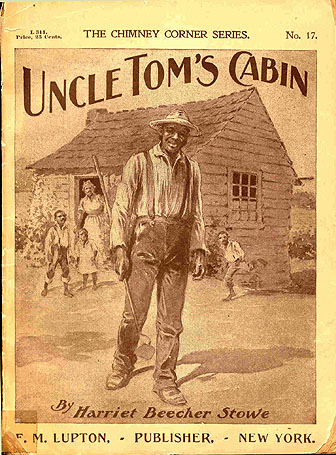
Mary Prince’s story is similar to that of Tom in Harriet Beecher Stowe’s Uncle Tom’s Cabin (1852).  This story takes place in the United States, but also uses some similar rhetorical strategies to those in “The History of Mary Prince.”  In Stowe’s novel, Tom is a slave who has recently been sold.  While traveling to meet his new owner, Tom encounters a young girl named Eva St. Claire.  Tom saves Eva from drowning and is soon bought by Eva’s family.  Tom becomes very close to Eva and eventually teaches her about Christianity through reading his Bible together.  Eva and her father soon die, and Tom is sold to a new owner who beats and tortures him to the point of death (You can see a video of this here).  Tom begins to struggle with his faith because of the extreme cruelty that his master is showing him; however, he eventually comes to terms with it and teaches the other slaves about his faith.  Tom’s Christian faith is strong, and only wavers because of the immense cruelty of his master.  During this time, many people believed that slaves were less human than white people.  In this story, however, Tom’s white owner is seen as inhuman while Tom is a kind Christian man who only begins to struggle with his faith when faced with his white master’s.  

Saturday, January 30, 2016

Female Society in Turkey and England in the 1700s

In the 1700s, people used travel writings as a way to experience and learn about another culture that they had never visited.  Lady Mary Wortley Montagu’s writings about her travels in Turkey were good examples of that.  Because she was a woman, Montagu was also able to provide a certain perspective that travel writing had previously been lacking.  We can learn many things about the differences between women and society in Turkey and England in the 1700s from Lady Mary Wortley Montagu’s letters written about the Turkish baths.  Montagu’s position as an influential woman allowed her to give us some insight into the Turkish culture that we would not be able to get from a man. 

Due to her unique position, Montagu was able to enter the Turkish baths and spend time with the women there.  One of the first things Montagu notices when she arrives at the baths is that she is dressed very differently from the others.  She observes that “I was in my traveling habit…and certainly appeared very extraordinary to them.  Yet there was not one of them that showed the least surprise or impertinent curiosity, but received me with all the obliging civility possible” (2761).  Her clothing is very out of place there, but they still treat her very kindly.  She comments that women in England would never have been this polite to a stranger, particularly one dressed as differently as she is.  In England there are “…disdainful smiles or satirical whispers…when anyone appears that is not dressed exactly in fashion” (2761).  The Turkish women are much more accepting of Montagu’s differences than British women would have been in a similar situation.  The women in these baths were much kinder and more considerate than the women Montagu was used to being with.  Their kindness and acceptance was so enjoyable, in fact, that Montagu was disappointed by other attractions she later saw in Turkey. 

Source:
Montagu, Lady Mar Worley. "Letters...Written During Her Travels." The Norton Anthology English Literature: The Restoration and the Eighteenth Century. Ed. Stephen Greenblatt. New York: Noton, 2012. 2760-2762. Print.

Sunday, January 24, 2016

Swift's Commentary on Early Eighteenth-Century Ireland

        Jonathan Swift’s A Modest Proposal is a piece of satirical writing commenting on the influence England had on Ireland in the early eighteenth century.  During the time Swift was writing, religious and economic difficulties had caused Ireland to become a “virtual colony” of England (Baker).  The Irish were miserable and penniless.  Swift writes that “It is a melancholy object to walk through this great town…when they see the streets, the roads, and cabin doors crowded with beggars of the female sex, followed by three, four, or six children, all in rags and all importuning every passenger for an alms” (Swift 2633).  Living conditions were terrible for nearly everyone outside of the upper class. 

        Swift uses satire in A Modest Proposal as a way to condemn the control that England had over Ireland and the policies they had put into place that caused so much suffering for the people living there.  Swift flipped England’s stereotype of the Irish being cannibals in order to incriminate the English themselves (Zeenat 165).  Swift writes that the babies they will eat “will be somewhat dear, and therefore very proper for the landlords, who, as they have already devoured most of the parents, seem to have the best title to the children” (Swift 2635).  He is implying that England is, in fact, engaging in cannibalism as it slowly consumes and destroys the Irish. 

        In the end, Swift’s writing had a great impact on the people involved in this turmoil in Ireland.  An earlier publication of Swift’s entiProposal for the Universal Use of Irish Manufacture caused an “…extraordinary flowering of economic publications in Ireland….after two decades of near silence on the subject” (Zeenat 162).  Likewise, A Modest Proposal eventually achieved Swift’s goal of addressing the English while also encouraging the people of Ireland to try and improve their lives. 
tled


Works Cited:
Baker, Lyman A. "Conditions in Early Eighteenth-Century Ireland." Kansas State University, 28 Mar 1999. Web. 24 Jan 2016.
Swift, Jonathan. "A Modest Proposal." The Norton Anthology English Literature: The Restoration and the Eighteenth Century. Ed. Stephen Greenblatt. New York: Norton, 2012. 2633-2639. Print.
Zeenat, Afrin. "Writing Irish Nationhood: Jonathan Swift’s Coming to Terms with his Birthplace." Nebula 6.2 (2009): 19. Print.

Saturday, January 16, 2016

Mary Astell's Views on Marriage

In her essay "Some Reflections upon Marriage," Mary Astell's views on marriage seem very progressive for her time.  She writes “what poor woman is ever taught that she should have a higher design than to get her a husband?” (2423).  Most women during this time believed that getting a husband should be their main goal in order to be supported and have a happy life.  Astell, on the other hand, argues against this belief in saying that marriage does not automatically create a happy life if it is not done for many of the right reasons. 
                This unhappy marriage that Astell writes about was likely very common during this time period.  In her “Answer to Some Objections to Reflections upon Marriage,” Astell states that many believed that her work was “destructive to the government” (3019).  She goes on to state that this government is run entirely by men and that women are treated unfairly in it.  She writes that “if all men are born free, how is it that all women are born slaves?” (3020). Women during this time were subjected to the interests and desires of men without having much of a say of their own in how things were done.  She questions “why is slavery so much condened and strove against in one case and so highly applauded and held so necessary and so sacred in another?” (3020).

Mary Astell’s idea of marriage seems as if it could directly relate to the family seen in William Hogarth’s “Marriage A’la Mode.”  In these paintings, it is clear that the couple married simply for financial reasons. As Astell states, “…an estate…should not be the main, much less the only consideration; for happiness does not depend on wealth” (2421).  This couple married purely for financial reasons and; therefore, do not achieve happiness.